Understanding GLP-1 Peptides: A Plain-English Guide to the Core Concepts
The phrase joins two ideas that people often merge. GLP-1 names a hormone and the receptor it acts on. Peptide names a molecular shape, a chain of amino acids. Put together, the phrase describes how certain drugs are built, and says nothing whatsoever about whether a particular product was reviewed or is legal to sell.
What a peptide is
Amino acids are the building blocks of proteins. String a modest number of them together and the result is a peptide. String many more and convention starts calling it a protein, with the dividing line sitting loosely around fifty units rather than at any exact count. There is no separate chemistry on either side of that line. The label is descriptive.
Peptides sit awkwardly in the body. Enzymes cut them apart, the kidney clears the fragments, and the gut wall absorbs large chains poorly. Every design decision behind the drugs in this class traces back to those three facts.
The hormone the class is named after
Glucagon-like peptide-1 is an incretin, meaning a gut hormone released in response to food that amplifies the insulin response to a meal. It also suppresses glucagon, slows gastric emptying, and signals satiety through receptors in the brain. Its useful half-life in circulation is a matter of minutes because dipeptidyl peptidase-4 clips it almost immediately.
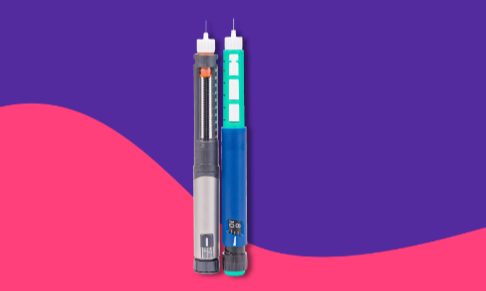
That short life is the whole engineering problem. A molecule with the hormone’s activity and a duration measured in days rather than minutes becomes a once-weekly medicine. Structural work on semaglutide added a fatty diacid chain that binds albumin in the bloodstream, which shields the molecule and slows clearance. Tirzepatide took a different route, a 39 amino acid synthetic peptide built on the sequence of a second incretin, so that it activates both the GIP receptor and the GLP-1 receptor.
A glossary that changes how claims read
| Term | Plain meaning | Why it changes a claim |
|---|---|---|
| Receptor agonist | A substance that binds a receptor and switches it on, imitating the body’s own signal | Class membership depends on the receptor engaged, not on the molecule’s shape, which is how a non-peptide can belong |
| Incretin | A gut hormone that increases insulin release after eating | Explains why these drugs act on blood sugar and appetite at the same time rather than on one alone |
| Dual agonist | One molecule activating two different receptors | Tirzepatide engages GIP and GLP-1 receptors, a design goal recorded in its earliest published development work |
| Half-life | How long the body takes to clear half a dose | Separates a twice-daily product from a weekly one; it is an engineering result, not a measure of strength |
| Active pharmaceutical ingredient | The raw drug substance before it becomes a finished, packaged product | Bulk ingredient is not a medicine. FDA established an import alert for GLP-1 ingredient shipments with potential quality concerns |
| Indication | The specific use a regulator agreed a product treats | Two brands of one molecule can hold different indications and behave like separate products at the pharmacy |
| Immunogenicity | The chance a foreign chain provokes an immune response | A recurring FDA concern for peptides specifically, tied to impurities, aggregation, and route of administration |
Not every drug in the class is a peptide
Orforglipron breaks the pattern and is worth understanding for exactly that reason. Marketed as Foundayo and approved for reducing excess body weight and maintaining that reduction in adults with obesity or overweight with a weight-related condition, it activates the GLP-1 receptor without being a chain of amino acids. Published work describes it as an oral small-molecule GLP-1 receptor agonist. Because it is not a peptide, digestion does not destroy it, and it is taken as a daily tablet with or without food.
The peptides in the class needed other answers to the same problem. Oral semaglutide tablets rely on an absorption enhancer and strict timing rules; the injectables sidestep the gut entirely.
Molecule, ingredient, and finished product are three different things
A molecule name is an abstraction. A quantity of active ingredient is a raw material. A finished drug product is that material formulated, filled, tested, labeled, and shipped under controls, with someone accountable for every step. Sales pages for research vials collapse all three into a molecule name, which is where most of the confusion in this category originates.
It also explains what a monthly price covers. Cash programs from Ro, Hims and Hers, LifeMD, and physician-supervised services such as FormBlends bundle clinician review, pharmacy preparation, and shipping into one figure, rather than pricing a quantity of molecule. Compounded preparations are not FDA-approved, which is a fact about the finished product rather than about the chemistry inside it.
Why the term shows up on unapproved listings
“Peptide” reads as technical and neutral, which makes it useful cover. FDA’s review of substances nominated for compounding shows why neutrality is not warranted for this molecular class. The agency has repeatedly cited immunogenicity risk, aggregation, peptide-related impurities, and the difficulty of characterizing the ingredient across compounds including CJC-1295, ipamorelin acetate, and GHRP-2. Verification is harder for peptides than for small molecules, which is the reverse of what the casual usage implies.
Separating the finished product from the molecule also clarifies what to ask a provider. Named cash services are not interchangeable: LillyDirect and NovoCare route a patient to an approved brand product, whereas Ro, Henry Meds, and HealthRX operate their own review and describe their peptide therapy under supervision by a licensed clinician. Whichever a person picks, the finished product still carries the regulatory status of its category, approved or compounded, and the molecule name printed on the label does not change that.
Frequently asked questions
Is glucagon-like peptide-1 related to glucagon?
They share ancestry, not function. Both are cut from the same precursor molecule, proglucagon, in different tissues. Glucagon raises blood sugar. GLP-1 does close to the opposite, prompting insulin release when glucose is elevated while restraining glucagon. The name reflects sequence similarity, not matching effects.
Where is the line between a peptide and a protein?
It is a convention rather than a rule, usually placed near fifty amino acids. Nothing changes chemically at that point. The distinction matters mainly for manufacturing and analysis, since larger chains fold into structures that complicate characterization and raise the difficulty of showing that two batches are the same.
What does an absorption enhancer do?
It helps a peptide survive the stomach and cross the gut lining well enough to reach circulation. Oral semaglutide products depend on one, along with specific conditions about when the tablet is taken relative to food and other medicines. That is why an oral peptide is not simply an injectable poured into a capsule.
Does bulk active ingredient count as a drug?
Not in the sense a patient would mean. It is raw material intended for manufacturing or lawful compounding, not a finished product. FDA has warned active pharmaceutical ingredient distributors selling GLP-1 material to compounders, and set up a border alert for shipments with potential quality problems.
Do all these molecules produce the same effects?
They share a mechanism and differ in duration, receptor coverage, formulation, and approved use. Published pharmacology attributes appetite and glycemic effects to receptor activation in the brain and gut. How much a given molecule does of each depends on its design and on the dose range its label supports.